Centre Hospitalier Simone Veil de Blois
France, Blois
Healthcare
Studies
2035
Facing a heterogeneous hospital estate—the main building, constructed in 1978, is no longer entirely suited to modern medical practices—the Centre Hospitalier Simone Veil in Blois is embarking on a major reconstruction guided by an ambitious and responsible vision.
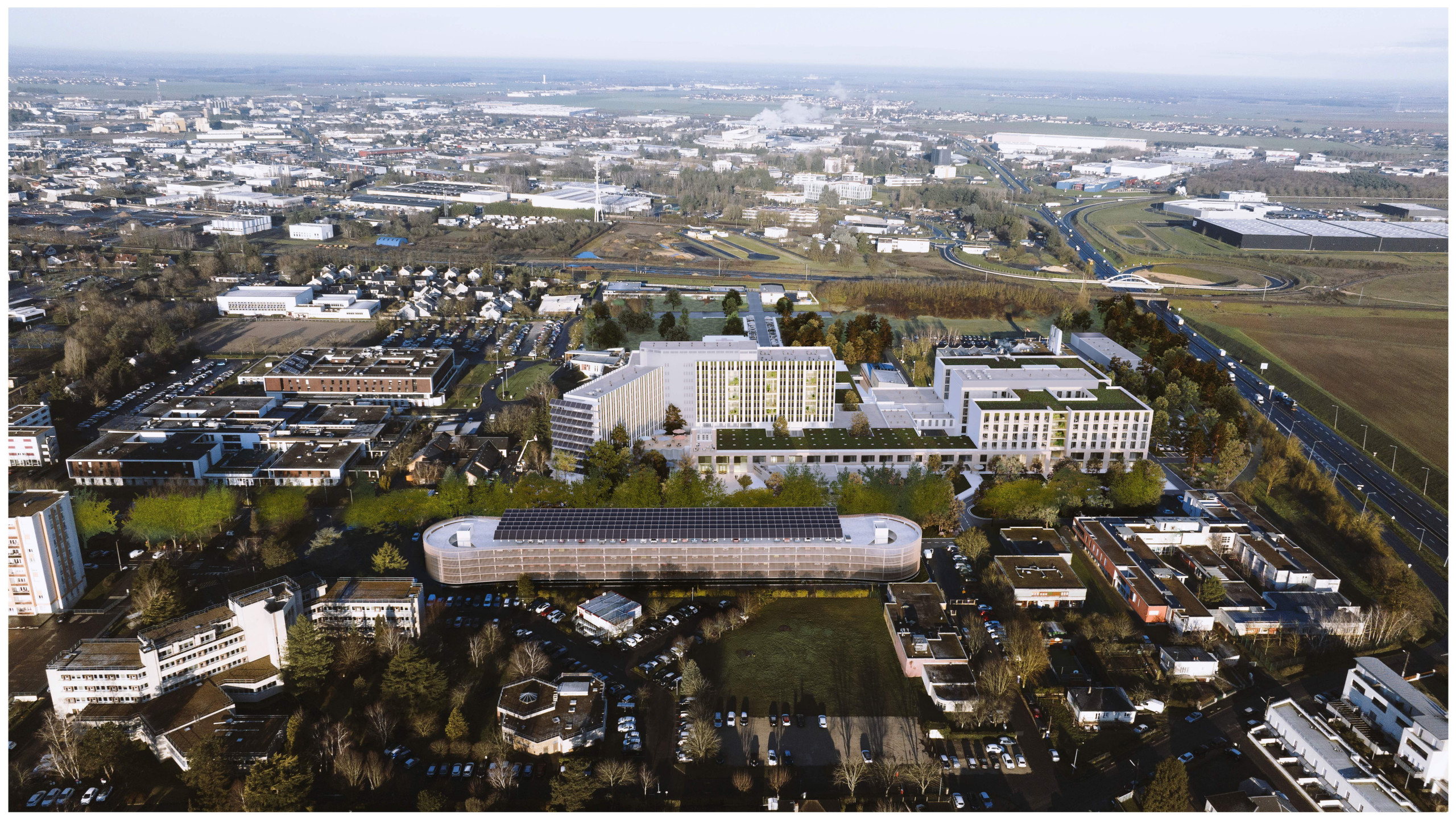
The project is based on a radical choice: grouping all extensions into a single building instead of fragmenting the construction. This approach makes it possible to maintain hospital activity without interruption, gain 6 years on the initial schedule, and halve the duration of the works.
By delivering all accommodations, as well as the operating theater, in a single block, the project secures strategic functions while radically reducing the risks of hospital-acquired infections (nosocomial) and aspergillosis.
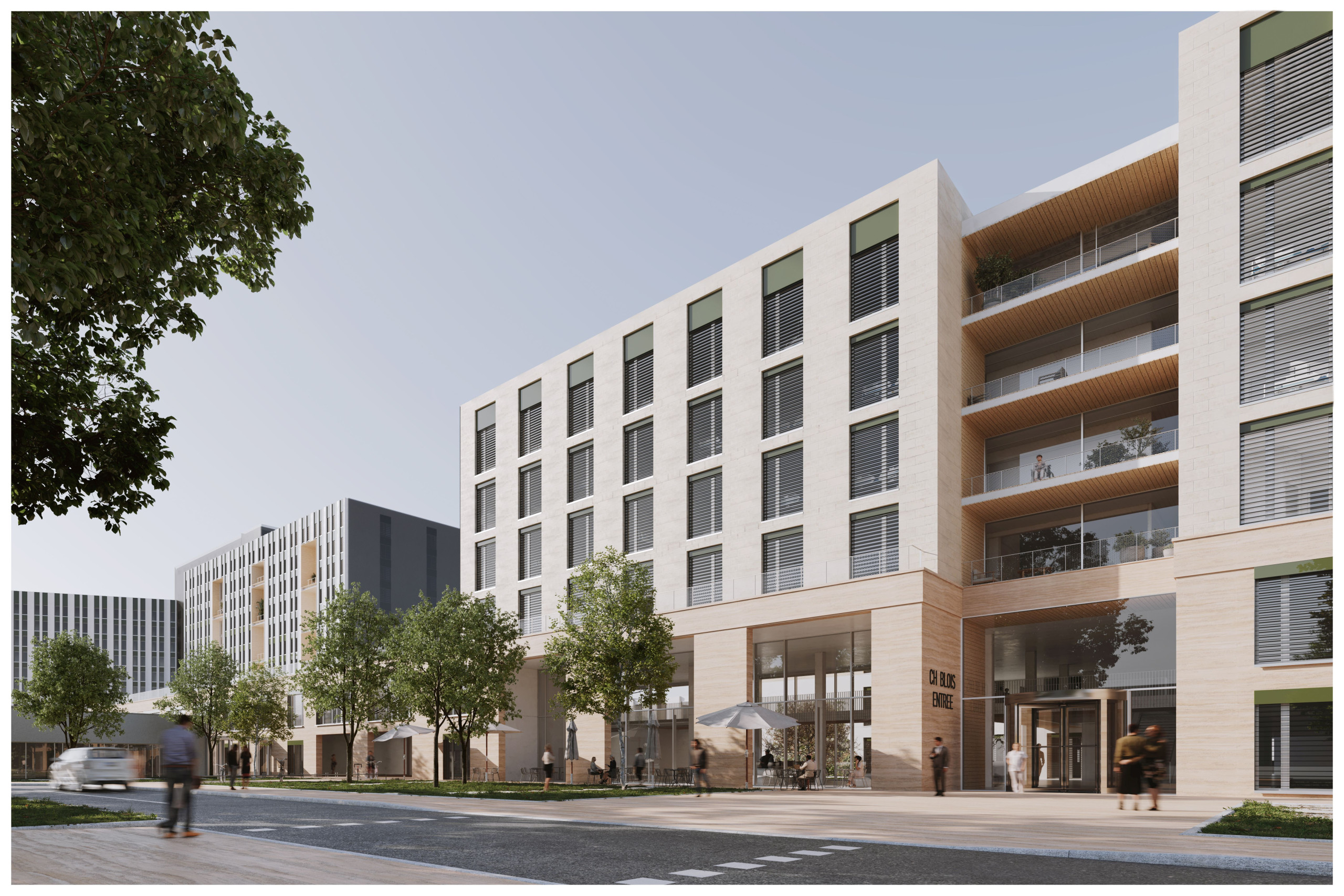
The environmental approach is at the core of the project. Rather than demolishing the main building to rebuild anew, the architecture preserves and refurbishes the existing structure.
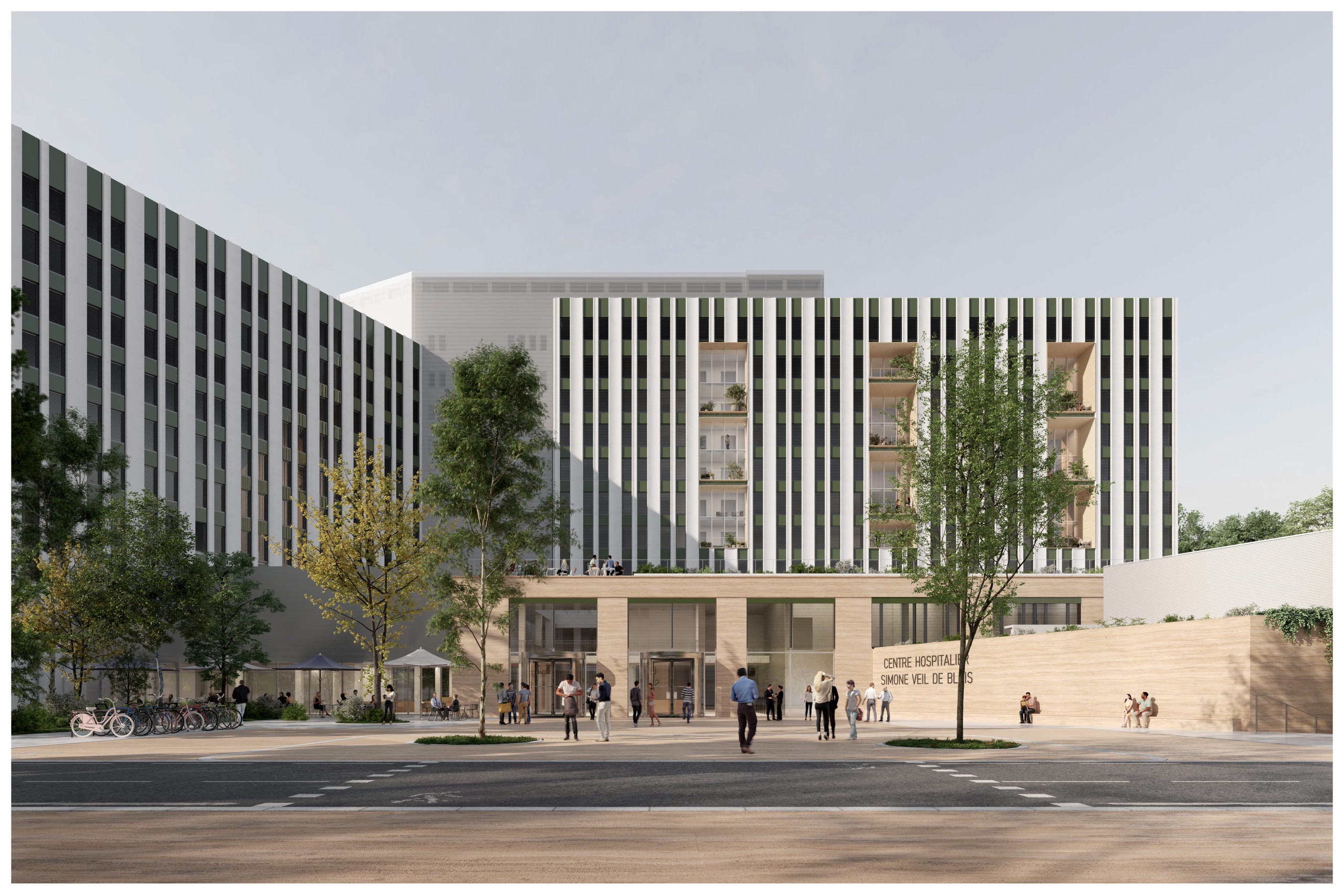
The characteristic curved concrete panels, designed by architect Jean Seac’h, are retained thanks to high-performance interior insulation. The new facades use stone from French quarries and site concrete based on local earth, drastically reducing the carbon footprint.
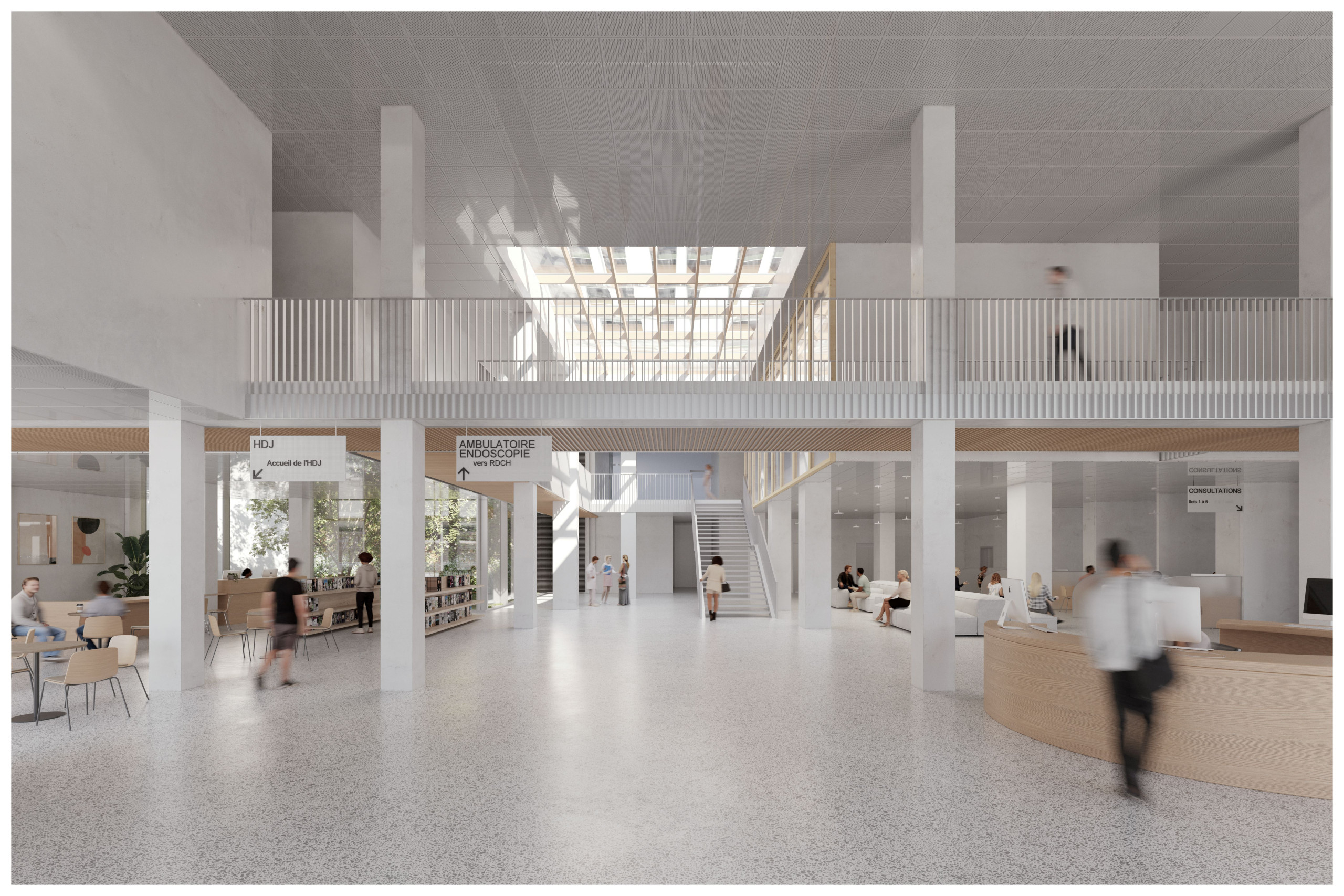
To anticipate unpredictable changes in medicine over several decades, the project proposes neutral and modular architecture based on a 7.50 m orthogonal grid. The large, continuous horizontal floor plates, regularly punctuated by 15 m patios, ensure natural light and maximum flexibility. This organization allows for all future reconfigurations, both during the design phases and throughout the life of the building.
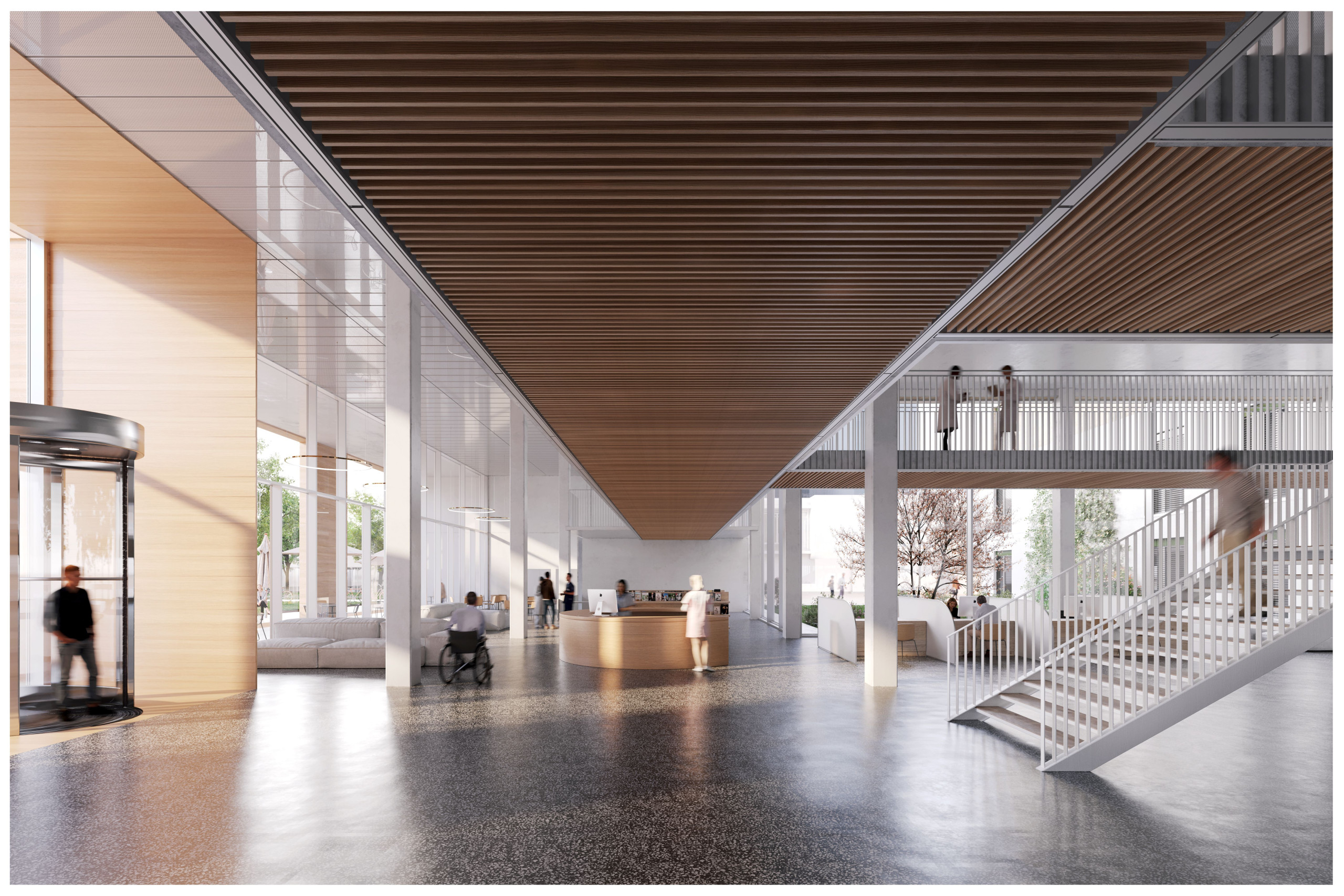
The project also aims to reintegrate the hospital into the urban fabric by extending the Mail Pierre Charlot, a structuring green artery of Blois, right to the heart of the hospital site. The plane tree alignments redefine a coherent built front and provide a strong vegetal identity. The new double-height lobbies, finished with tufa and slate terrazzo, open onto planted patios, creating a soothing atmosphere where wood and nature mingle.
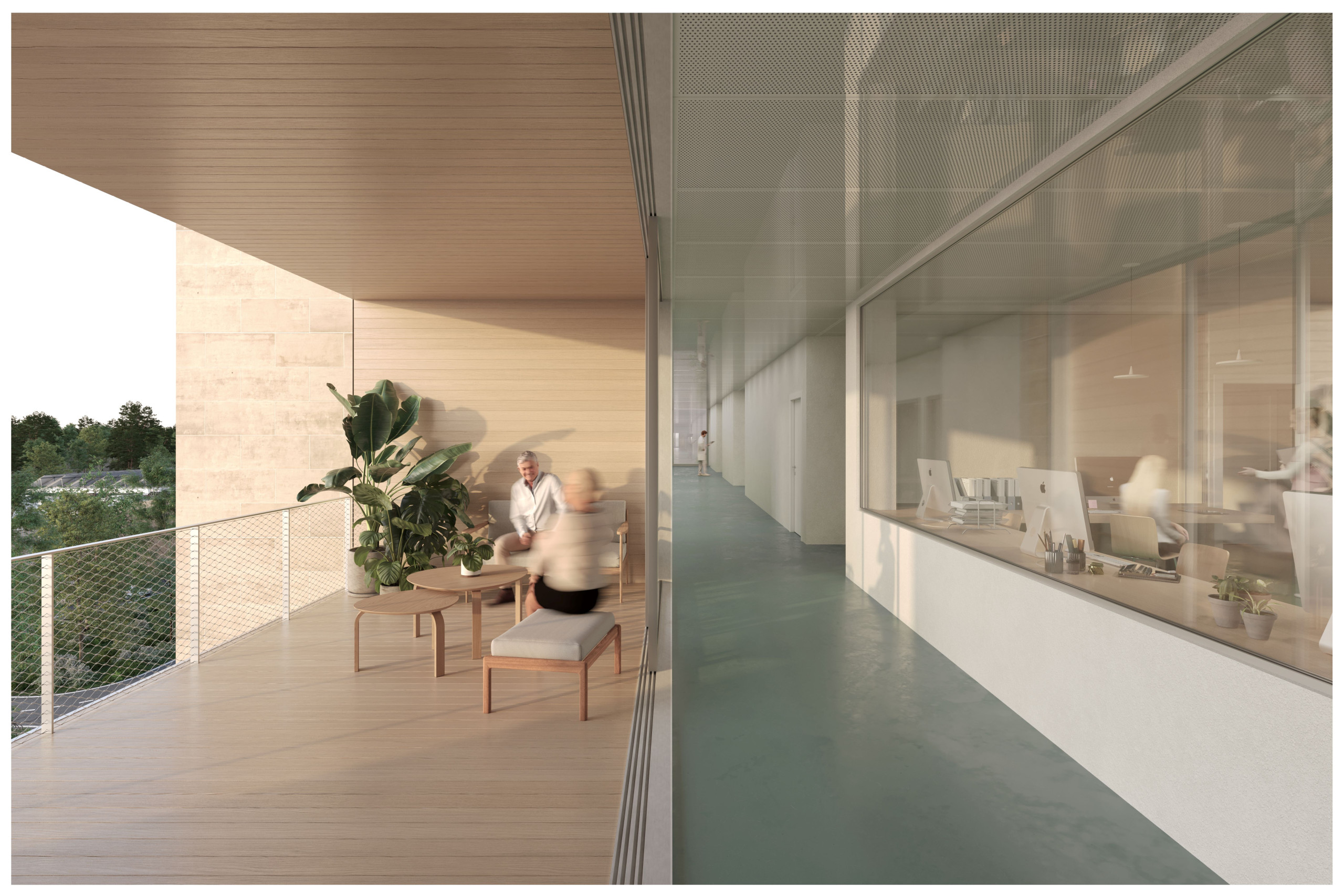
The architecture decidedly places well-being at the center: generously glazed facades offer light and panoramic views, wooden loggias at the heart of each unit create genuine “village squares,” and bright breaches form breathing spaces within the departments. The modular “T” organization optimizes professional pathways, reducing the distances to be covered between the furthest rooms by up to 40%.
Ultimately, this project embodies a vision for the future that reconciles operational efficiency and quality of use: a compact hospital respectful of its architectural heritage, frugal in its means but generous in its spaces—a place that truly cares for its users and contributes to patient recovery through the quality of its architecture.
Rehabilitation and New Construction Works on the Main Site of the Blois Hospital (CH de Blois): restructuring of the main building by 80, including urban development of the site and definition of technical needs; extension of the main building for the operating theater and maternity unit activities; extension of the main building for the development of the day hospital, extending the outpatient consultation center, and the creation of a convertible “swing space” building to allow for the phasing of works on the main building, convertible or “swing space” building, which will ultimately be used for offices and/or intern accommodation rooms, and can accommodate 120 full hospitalization beds; construction of a helipad above the emergency department; construction of an administrative building and the staff cafeteria/self-service restaurant; restructuring and extension for the laundry, general services, and technical services workshops; construction of a parking garage (silo) as part of the reorganization of flows and parking facilities across the site.
Centre Hospitalier Simone Veil de Blois
Public Procurement (MOP law)
Brunet Saunier & Associés
Ivars & Ballet
Gerold Zimmerli
Us &Co (construction economist), Ingérop (engineering and technical consultant), 3I1 (engineering and technical consultant), Sigma Acoustique (acoustics engineering), Elementerre (landscape designer), Helipartner (helipad), Alto Ingénierie (HEQ), Jeudi Wang (architectural renderer)
Clément Billaquois (competition project manager), Garcie de Navailles (studies project manager), David Tessier, Mauve Esteoule-Sibilli, Felix Gautherot
61 874 sq. m (58 023 sq. m new construction + 3 850 sq. m restructuration)